
Embassy relations between Kazakhstan and Russia in the 1700s–1720s.
Research Article
DOI:
https://doi.org/10.65076/Keywords:
Kazakh Khanate, Russian State, embassies, early 18th century, Tobolsk, KazanAbstract
Based on archival documents and published written sources, this article shows the dynamics of embassy relations between the Kazakh Khanate and the Russian state in the first decades of the 18th century. The author has systematized all known embassy contacts between the two sides and revealed new ones previously unknown in historiography. The main problems of bilateral relations raised during embassy contacts are identified: issues of military cooperation in the fight against the Dzungars, problems of security on the Kazakh-Russian border, the suppression of mutual attacks, and the establishment of trade relations. The regularity with which these issues were raised in diplomatic correspondence and during mutual embassy visits indicates that many problems remained unresolved. At the same time, both sides were formally committed to overcoming the problems that arose. The materials show that at the beginning of the 18th century, there were several centers of relations between Russia and the Kazakhs, namely Kazan, Ufa, and Tobolsk. At the same time, the Siberian administration under Governor Prince M.P. Gagarin was more active in establishing contacts with the Kazakhs. A distinctive feature of this stage in relations between the Kazakhs and Russia was the complex foreign policy situation in southern Siberia and Central Asia associated with the active policy of the Dzungar state, which was defending its interests in the region. This stage is also characterized by a revival of Russian interest in the region in the middle of the second decade of the 18th century. During this period, changes in the structure of interaction, caused by both internal reforms on the Russian side and external challenges faced by both sides, played a special role in the development of diplomatic relations between the Kazakh rulers and the Russian state. The strengthening of Russia's position in the Ural-Caspian region, as well as the growing threat from Dzungaria, forced Kazakh rulers to intensify dialogue with the Russian border administration. This manifested itself in an increase in the number of embassy missions and an expansion of the range of issues discussed, covering not only military and trade matters, but also the security of border territories. In turn, centers such as Kazan, Ufa, and especially Tobolsk became important hubs through which most embassy contacts passed. The intensity of embassy relations in the second decade of the 18th century after a hiatus allows us to distinguish this period as a separate stage in the history of diplomatic relations between the Kazakh rulers and the Russian state. The article clarifies the duration of the new stage, the dates of a number of embassies, and the content of the negotiations.
Downloads
References
Басин В.Я. О русско-казахских дипломатических отношениях в начале XVIII века. Известия Академии наук Казахской ССР. Серия общественных наук. 1965. Вып. 5. С.39–51.
Басин В.Я. Казахстан в системе внешней политики России в первой половине XVIII века. В: Казахстан в XV–XVIII веках (Вопросы социально-политической истории). Алма-Ата: Наука, 1969. С.50–145.
Басин В.Я. Россия и казахские ханства в ХVI – ХVIII вв.: Казахстан в системе внешней политики российской империи. Алма-Ата: Наука. 1971. 276 с.
Дүйсен С.Ж. Қазақстан дипломатиясы (тарихы аспект). Астана, 2018. 336 б.
Ерофеева И.В. Хан Абулхаир: полководец, правитель, политик. Алматы: Дайк-Пресс. 2007. 456 с.
Жаппасов Ж.Е. XVI-XVIII ғғ. қазақ-орыс қарым-қатынастарының тарихы. Алматы: Қазақ университеті. 2011. 147 б.
Златкин И.Я. История Джунгарского ханства 1635-1758 гг. Москва: Наука. 1983. 333 с.
Кабульдинов З.Е. О набегах казахов Среднего жуза на внутреннюю сторону в XVII- конце XVIII веков. Омск: Изд-во ОмГАУ. 2001. 12 с.
Кабульдинов З.Е. О появлении казахов во внутренних российских уездах Оренбургского края в XVI – начале XVIII в. Уржумка: научный журнал. 2002. No.1(7), с.13-18.
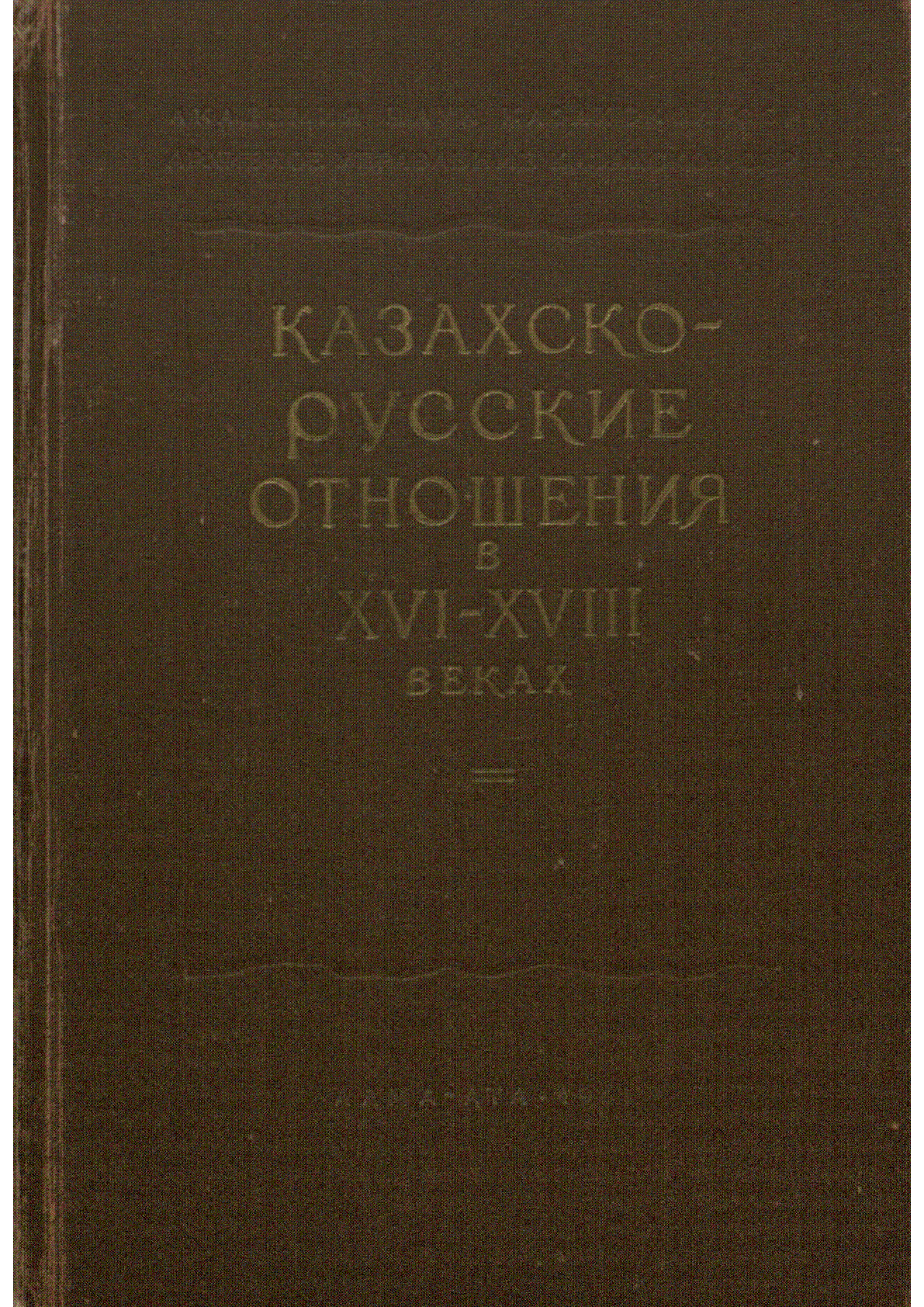
Казахско-русские отношения в XVI–XVIII веках (сборник документов и материалов). Алма-Ата: Изд. АН КазССР. 1961. XVI+743 с.
Маслюженко Д.Н. Казахи на территории Среднего Притоболья в XVI-XIX вв. Вестник Курганского государственного университета. Серия Гуманитарные науки. 2013. No.4, с.71-74.
Материалы по истории Башкирской АССР. Ч. 1: Башкирские восстания в XVII и первой половине XVIII вв. Москва; Ленинград: Изд-во Академии наук СССР. 1936. 630 с.
Моисеев В. А. Джунгарское ханство и казахи (XVII–XVIII вв.). Алма-Ата: Гылым. 1991. 238 с.
Памятники Сибирской истории XVIII века. Кн. 2: 1713-1724. Санкт-Петербург: Типография Министерства внутренних дел. 1885. XXIV+541 с.
Под стягом России: Сборник архивных документов. Москва: Русская книга. 1992. 432 с
Почекаев Р. Ю. Мнимый сюзеренитет: московские цари и казахские ханы (по русскоязычным посольским документам конца XVI – начала XVIII вв.). Электронный научно-образовательный журнал «История». 2019. T. 10. Выпуск 1 (75). https://history.jes.su/s207987840002567-2-1/. DOI: 10.18254/S0002567-2-1
Пузанов В.Д. Русско-казахские отношения на юге Сибири (конец XVII-XVIII вв.). Западная Сибирь: прошлое, настоящее и будущее. Сургут: Диорит. 2004. с. 90-104.
Русские летописи и официальные материалы XVI – первой половины XVIII вв. о народах Казахстана. Т. 2. Алматы: Дайк Пресс. 2005. 448 с.
Словарь русского языка XI–XVII вв. Вып. 24. Москва: Наука. 2000. 254 с.
Эпистолярное наследие казахской правящей элиты 1675–1821 гг. Сборник исторических документов в 2-х томах. Т. I. Письма казахских правителей. 1675–1780 гг. Алматы: АО «АБДИ Компани». 2014. 696 с.
Downloads
Published
Issue
Section
License
Copyright (c) 2025 N. lapin

This work is licensed under a Creative Commons Attribution-NonCommercial-NoDerivatives 4.0 International License.